The Biology of Beauty
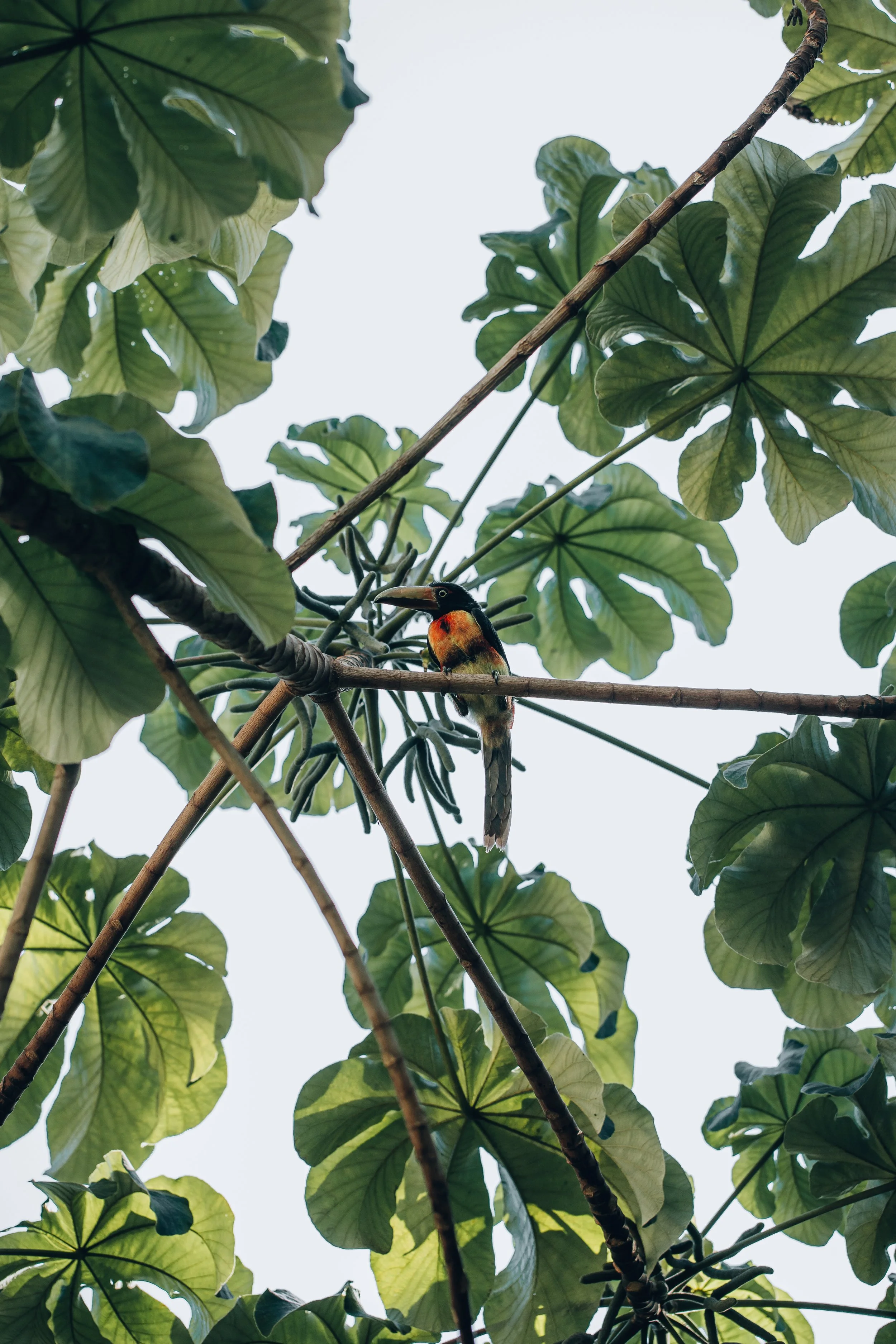
Beauty is recognition.
Long before architecture, the human nervous system learned to read landscapes. It learned to search for water, canopy, food, and filtered light. It learned that certain patterns meant continuity.
Green became a signal.
The eye settles in its presence. Breath lengthens. Muscle tension releases. Attention sharpens without strain.
This response is ancient. It lives beneath preference and taste.
At KAN, nature leads the design.
Seasonal mosaics of leaf, shadow, humidity, and light create an environment in constant calibration. Density shifts. Growth advances. Air circulates. Shade moves. Nothing remains static, yet everything feels coherent.
The body understands this language.
Fractals in the canopy. Veins in a leaf. Radial palms repeating with subtle variation.
These patterns register as order within complexity — a condition the nervous system reads as safety.
Green shapes perception.
It softens visual noise.
It regulates light.
It absorbs heat.
It frames depth.
Layered vegetation establishes scale. It provides enclosure without confinement. It allows visibility without exposure. It creates transition rather than boundary.
This is how environments support physiology.
Architecture at KAN follows this intelligence.
Circulation aligns with prevailing air. Shade follows solar movement. Materials hold temperature. Water gathers and reflects light.
Each decision reduces unnecessary effort. Each space acknowledges the body’s baseline needs for orientation, refuge, and rhythm.
Nature here is structural.
It defines movement.
It influences acoustics.
It moderates climate.
It guides recovery.
Beauty emerges from alignment between human biology and environment.
When landscape and architecture operate in concert, the body relaxes into itself. Attention deepens. Conversation lingers. Time feels proportional.
Green remains the constant.
A colour that signals growth.
A field that shapes safety.
A system that restores equilibrium through pattern and scale.
This is the biology of beauty.
And it defines KAN.